
Short and longterm vaccination efficacy against piscine lactococcosis
Justification
Aquaculture plays an increasingly important role in the global fish supply, particularly of food fish, where contributions from aquaculture have recently exceeded those of capture fisheries [1,2]. Infectious disease is a primary factor constraining sustainable expansion of the sector, and intensive aquaculture practices have facilitated the emergence and rapid dissemination of several potentially devastating pathogens [3,4]. Significant among these, lactococcosis caused by Lactococcus petauri threatens both cultured and wild fish populations. The earliest clinical signs of infection include anorexia, melanosis, lethargy, and erratic swimming [5]. The hemorrhagic septicemia typical of lactococcosis results in high mortality rates upwards of 75%, and outbreaks often fail to respond to medicated feed or other treatment measures, leading to heavy economic costs [5-7]. This catastrophic disease is already well established throughout Europe, Asia, Africa and Australia, where it is a problem in both trout farming and mariculture industries [5-10]. Prior to 2016, lactococcosis was reported only sporadically in the Americas [5-10]. However, in the last five years, several outbreaks in private and state aquaculture facilities in Northern America have led to massive losses of both fish and revenue [7,8,10]. In California alone, the first L. petauri outbreaks in 2020 led to depopulation events that temporarily shut down some of the largest trout hatcheries in the state and necessitated euthanasia of over 3 million fish [7,11,12]. The disease is difficult to eliminate and has since reappeared in previously afflicted facilities, in addition to reports in several other US states, including Arizona, Washington, Alabama, Pennsylvania and New Jersey, as well as in Canada, Mexico and Brazil [13-18].
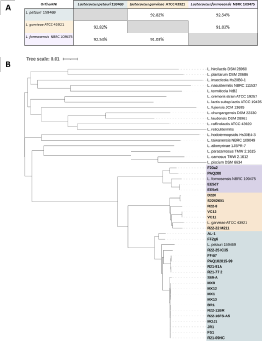
Lactococcosis has historically been attributed to L. garvieae; however, recent genetic analysis by our laboratory has revealed the 2016-2023 outbreaks and epizootics in Washington, California, Arizona, and Mexico, were in fact caused by L. petauri, which appears to be the primary agent of lactococcosis in the Americas. The outbreaks in Brazil since 2019, Canada in 2021 and 2022 and Pennsylvania in 2023 have been also associated with L. petauri [13-16] (Figure 1). Given its emerging nature in the USA, this disease as well as its interaction with the fish host immune system have been vastly understudied, and their impacts subsequently underestimated.
Trout farming is the second largest production sector in the US food fish industry [1,2] and is particularly threatened by L. petauri, as preliminary work has shown hypervirulence of this species in rainbow trout (Oncorhynchus mykiss) compared to L. garvieae and L. formosensis [14]. The leading fish production sector, catfish (Ictalurus spp.) farming, is also at risk, as L. petauri infections have occurred at catfish facilities in the Southeastern US. Additionally, lactococcosis is not limited to fish. Marine mammals, terrestrial ungulates, dogs, rabbits, reptiles and birds can be clinically or sub-clinically infected, and lactococcosis in humans is considered an emerging disease globally [18-25]. Human lactococcosis commonly presents as infective endocarditis, with a fatality rate of 16%, but other clinical presentations, including septicaemia, meningitis, and peritonitis have also been reported [22,23,25].
Lactococcus sp. are well known neurotropic pathogens, the brain of infected individuals showing Gram positive cocci distributed over the meningeal surface and within the Virchoff’s spaces [20], meningitis and brain edema [5,6,20]. Thus, it is not surprising that the earliest clinical signs of infection are neurological and include anorexia, melanosis, lethargy, and erratic swimming [5-7,13]. Brain bacterial Infection of meninges and brain tissues is a major issue for farmed animals since critical behavioral and physiological functions such as swimming and feeding are negatively impacted in infected animals. Transmission from contaminated fish or food products have been implicated in most human cases [22,25]. Lactococcosis is therefore a disease of major concern for aquaculture, conservation, terrestrial agriculture, and human health.
Figure 1: (A) Average nucleotide identity shared between type strains of Lactococcus formosensis, L. garvieae and L. petauri. The accepted ANI cutoff for speciation is 95%. (B) Whole genome phylogenetic relationship between 29 representative isolates collected in the Americas (bold) and 21 type strains of established Lactococcus species. Clade color denotes species: teal – L. petauri, orange – L. garvieae, purple – L. formosensis. The percentage of trees in which the associated sequences clustered together in the bootstrap test (100 pseudo replicates) is indicated by increasing branch width.
Objectives & Timeline
1. Evaluate the efficacy of orally and immersion administered live-attenuated L. petauri vaccines against piscine lactococcosis in rainbow trout. (UC Davis - Soto, UNM - Salinas: Years 1 &2).
2. Evaluate the longevity of protection conferred by live-attenuated and inactive L. petauri vaccines. (UC Davis - Soto, UNM - Salinas: Years 1 &2).
3. Disseminate project results broadly to industry, fish health specialists, and aquaculture research and extension specialists (UC Davis – Soto, Gross, UNM - Salinas, NMST -Sallenave, UI - Bledsoe, Year 1-3)
Project Summary
- 3 years
- 09/01/2025
- $558,166
- Irene SalinasRole: PI
- Jackson GrossRole: Outreach coordinator
- Role: Outreach coordinator
- Jacob BledsoeRole: Outreach coordinator
- Ken Beer, The FisheryRole: Industry advisor
- Role: Outreach coordinator
- Role: Project monitor